
Superman – Ultimate Flight Outfitted with Seatbelts

The train of Superman – Ultimate Flight at Six Flags Discovery Kingdom has been modified while the park was closed this past week.
The single train of 12 passengers now includes seat belts as well as upgraded, metal side guards. Originally the ride included only plastic guards along the sides of the seats, however, they were continually broken due to guests leaning on them in order to enter the train.
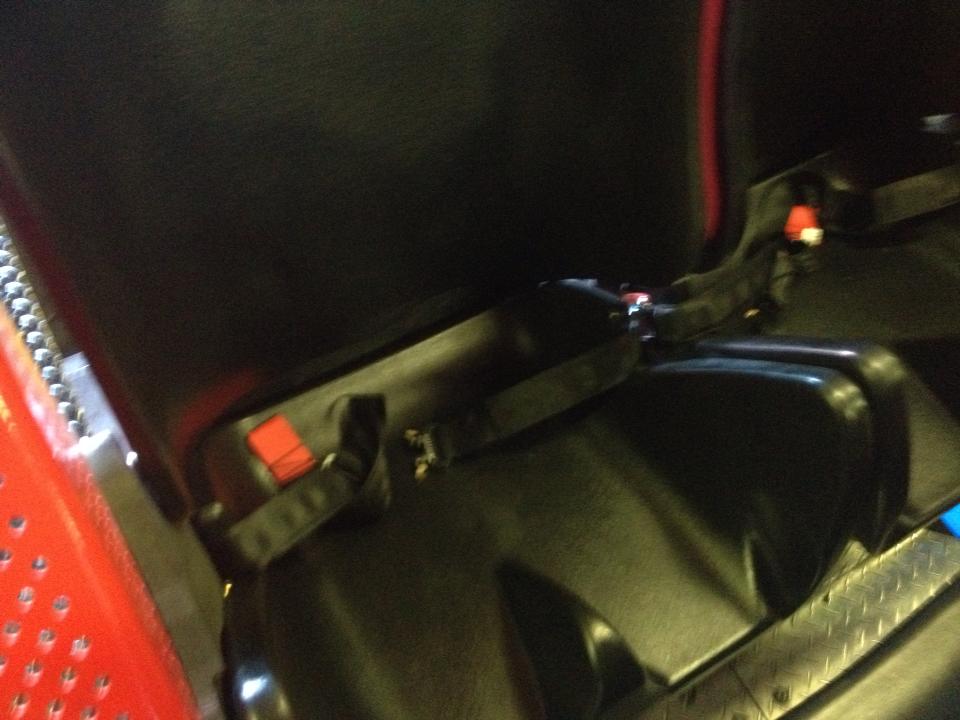
Riders on Superman – Ultimate Flight will be greeted by an additional restraint the next time they ride, and are asked not to lower their own restraints. Photo by CGA Insider, Billy D’Anjou. Used with permission.

Metal, more resilient side guards have also been installed on Superman’s trains. The old ones were plastic and broke easily. Photo shared by CGA Insider, Billy D’Anjou. Used with permission.
According to riders on the coaster this weekend, the seatbelts have made the ride uncomfortable, with a “pinching” effect on the vertical drop.
Seatbelts seem to be the “new norm” on coasters across the country, in addition to the ubiquitous lap bar roller coaster restraint. It would appear the “dual restraint system” is here to stay – especially with the ride in litigation against parks in recent years. We shall see if it affects operations as the year goes on. (Superman’s crews are traditionally the most efficient in the park due to the single train design of the ride).
As for the side guards – these should prove to be much better and resilient than the plastic ones that debuted with the ride in mid-2012. These trains are not the easiest to get into our out of – so a more solid place to lean on will be a welcome addition!
Thanks to our site partner, CGA Insider (Billy D’Anjou) for the photos – you can visit his page at: au13watch.blogspot.com
Thanks for the Follow, Destination America!

It’s always great to receive new followers on social media – but some, such as the one I received last evening, are very special!
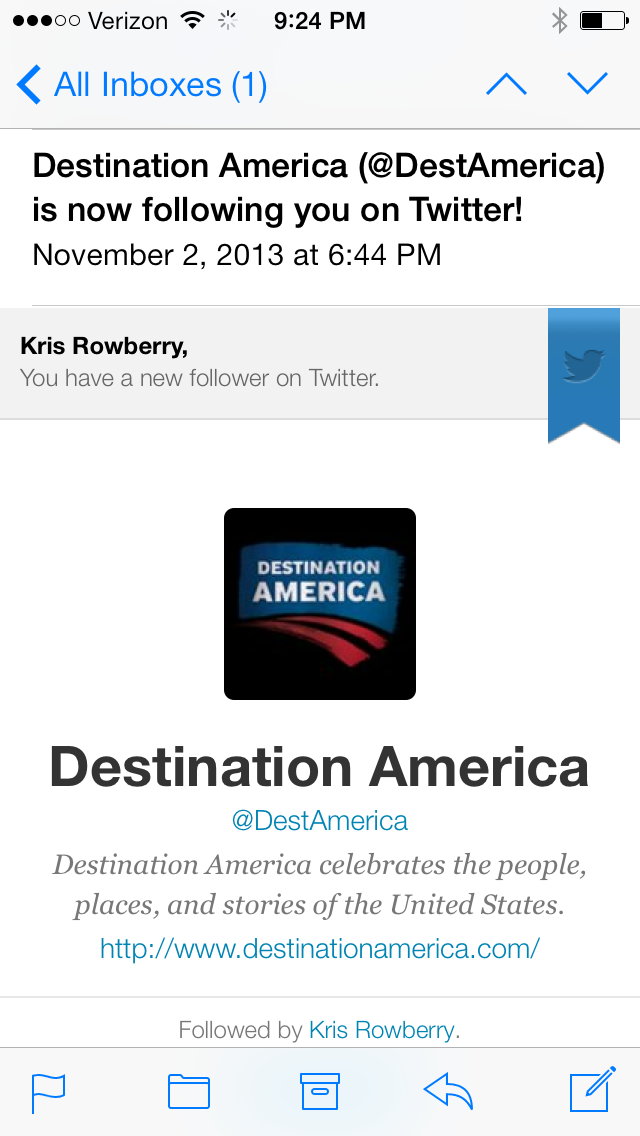
Thanks for the follow, Destination America – glad to have you along for the ride! This tweet brought to you by Verizon Wireless 4G LTE…
Destination America is a partner channel with Discovery Communications, and would be a WONDERFUL place to have Great American Thrills show just how amazing our amusement parks are – (wink wink, nod nod) after all…we invented them!
I look forward to sharing my passion of amusement and theme parks with you, Destination America – in addition to my extensive knowledge of Talkeetna, AK ; ) Have you ever tried their pancakes?

San Mateo County History Museum Presentation Tomorrow

Don’t forget!
Tomorrow afternoon is my “Lost Parks” presentation at the San Mateo County Museum.
The presentation starts promptly at 1:00pm – don’t be late!
Learn more here: http://www.historysmc.org/main.php?page=docket

“Lost Parks” featured in the San Francisco Examiner!

No, it’s not a broken record you’re hearing – I really am featured in / on a major news outlet for the second time this week!
This time, it’s the San Francisco Examiner, who were very kind to promote my “Lost Parks” presentation at the San Mateo County History Museum.

For the full article, pick up a copy of today’s Examiner, or click the link below.
Let’s hope to keep this remarkable streak alive and continue to build awareness for the brand – feel free to share Great American Thrills with all your friends, family and favorite television stations / networks!
Read the article here:
Or copy / paste this link:
Featured on BBC News!

Yes, you read that correctly – I had the honor of being featured in a BBC News video released today about roller coaster technology and the “plateau” some say we’ve reached. (I don’t think we have, by the way).

You can view the whole video by clicking here.
Or, you can copy and paste this link:
http://www.bbc.co.uk/news/technology-24553630
The backstory behind this interview is just as intriguing –
I had already planned to attend Six Flags Discovery Kingdom’s “Ghoulish Gathering” VIP event last Friday. When the tram dropped us off at the front entrance, I noticed a OMB (One Man Band) setup, with a man struggling to cope with the sound of the many rides in the area. In hindsight, I should have gone over to offer my assistance – but I digress…
When I asked the Public Relations person at the event about the cameraman, she immediately said, “Oh, he’s with the BBC…I should introduce you to him!”
Pinch me.
After we grabbed a bite to eat at the event, I got to talking with Richard, who quickly found out (and said), “I should interview you…”
You had to ask?
Careful to make sure I didn’t step on any known “land mines” when you do interviews like this, Richard slapped a lav mic on me, and into the sun he pointed me!
Now, it should be noted, that short of begging, I did my best to convince the segment producer to stay longer, so my Lost Parks Producer, American Coaster Enthusiasts Asst. Regional Rep AND all-around quality news source on all things coasters, Nicholas Laschkewitsch could arrive to be interviewed as well – but sadly, Richard had to leave before Nicholas could arrive. Thanks, BART Strike…
But, for now, it’s yet another milestone in my journey to be in the world of television. “Great American Thrills” has officially jumped the pond and gone international…WOW.
History Museum Presentation This Saturday
Planning your weekend already? Don’t forget about my “Lost Parks” presentation at the San Mateo County History Museum at 1:00pm this Saturday.
Join me as I take you back in time to five different defunct amusement parks from the greater Bay Area, as well as explain why our history is so important to preserve. In addition, you’ll see how you can still experience pieces of these long gone parks in our modern world. See you there!
Learn more, here: http://www.historysmc.org/main.php?page=docket

The Demon Song and Soundtrack
In honor of Halloween’s approach, what better way to theme your own, personal Haunt than by using the complete, original 1980 soundtrack from the line of the Demon at both Great America’s.
Yes, the “Demon Song” has been online for some time – but not the whole, nearly 30 minute queue recording, so enjoy!
A word of warning – this track is seriously corny!
Are Inversions Overrated?

The “Flip Flap Railway” punished riders with high, uneven g-forces.

Photo from the Orange County Archives.
Lost Parks, Episode 3: “Manteca Waterslides”
I am proud today to release our third episode in the “Lost Parks of Northern California” series, focusing on the “famous” Manteca Waterslides!
Learn how the modern water slide was born just off of Highway 120 in Manteca, where you can still go to experience pieces of the park today and why people still call the chamber of commerce, asking about the slides…nine years after the park closed for good.
This was on all accounts – the most difficult video we have produced thus far. The technical aspects alone were enough to make both myself and my producer, Nicholas Laschkewitsch throw a fit. But, we persevered – and are proud to show you our work of the past few months.
“The Lost Parks of Northern California” is produced in association with the American Coaster Enthusiasts, Northern California region. Learn more about them at: www.acenorcal.org
Renewing a Classic Coaster

Fans of classic roller coaster designs rejoice – one of the original looping coasters has received a new lease on life.
If you’re a hardcore roller coaster fan – you should instantly recognize the the motion being mimicked in this commercial – for the uninitiated, it’s the famous profile and movements of the Schwarzkopf Shuttle Loop.
Sadly, only half of the installations of this compact, but thrilling ride remain in the world today. The one we’ll be focusing on resides at Walibi World in Belgium.
The ride, originally called “Turbine,” had been closed since 2008, when parts simply ran out to repair the ride. (Schwarzkopf went under well over a decade ago). But the park had an idea – they contacted current coaster manufacturer Gerstlauer and asked, “Could you modernize the launch system on ‘Turbine’ to make it faster, more reliable and cheaper to operate?”
Turns out they could!
With a newer, more reliable launching system, utilizing all of the original track, mind you – Walibi went a step further, by giving the attraction an entirely new theme and completely enclosing the ride’s track. “Turbine” would enter the new millennium with a modern, linear induction launch system and be re-born as “Psyké Underground,” a dance club themed coaster.
Now at first thought, the theme might be a bit too much – a bit “over hip,” if you will. But after seeing the effects and how they work in tandem with the storyline of the ride – well, it WORKS!
For fans of this type of ride (and you know who you are), you’ll also be happy to know the ride still goes “all the way” up the back spike as well.
With the success of this transformation, my attention turns to another classic shuttle loop that has cheated the wrecking ball several times: “Montezooma’s Revenge” at Knott’s Berry Farm.
Because Schwarzkopf went out of business in the mid-1990’s, many of the parts for the ride have become scarce or must be manufactured in-house at enormous expense. When the clutch for the flywheel system burned out in the mid-2000s, many fans wondered if the ride would simply be removed, because of the lack of available parts.
With the recent closure of “Greezed Lightning” at Kentucky Kingdom, many of the parts and indeed the train from that ride (which itself was a combination of the original “Tidal Wave” weight drop shuttle loops from the two Marriott’s Great America parks) were purchased and shipped to Knott’s earlier this year to assist in keeping “Monte,” as it’s affectionately known, up and running.
Built in 1978, it’s the last flywheel shuttle loop of it’s kind in the United States, and one of only TWO left operating in North America).
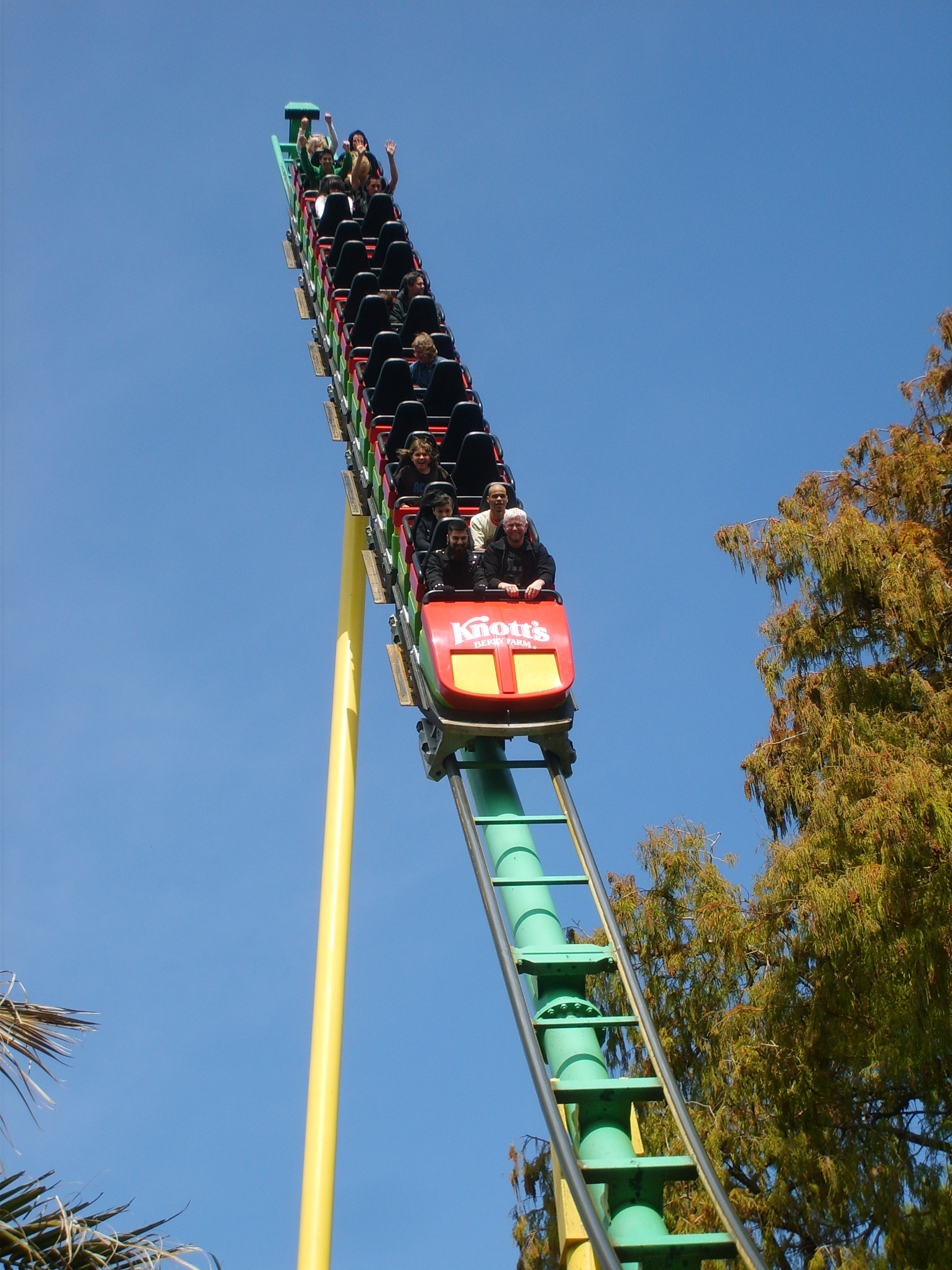
“Montezooma’s Revenge” at Knott’s Berry Farm utilizes a flywheel clutch launch system – the very same system that Walibi World replaced on “Turbine” with more powerful and modern linear induction motors.
A modification and modernization such as the one done to “Psyké Underground” in Belgium not only could keep the ride around for many more years, but could also significantly lower overall operating costs. No need to enclose the ride – though it would certainly make for a different riding experience with those strobe lights in a tube!
Now, I know, it’s not the “classic” launch system…but to me – it’s still the same ride if the track layout and design isn’t modified. The renovation done at Walibi World just goes to show, that a brilliant design, no matter the age, will ALWAYS stand the test of time!
And for those who are fans of the bouncy, modern dance soundtrack for the ride, you can find it here and on iTunes:
Happy Friday the 13th!

Got a case of trixadexaphobia? (Fear of the number 13?)
Better take a pass on the Twilight Zone Tower of Terror, found at several Disney parks. Just a perfect theme for a free fall ride.

Tower of Terror at the Disneyland Resort
Fun fact: For many years during it’s development, the ride was going to utilize the original Intamin “first generation” free fall technology:
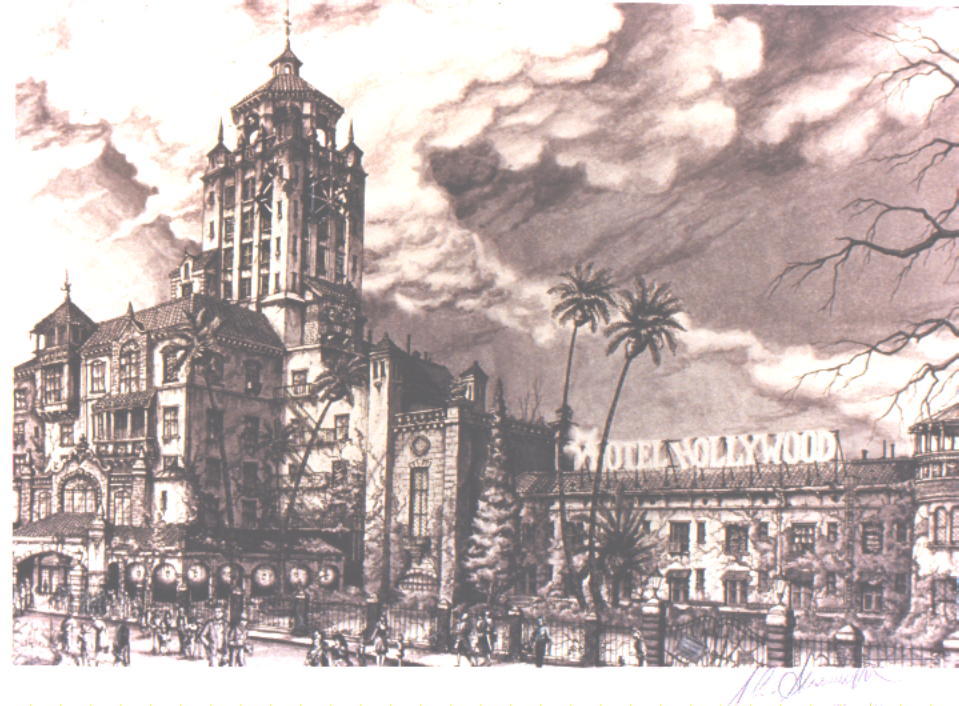
Photo from TowerofTerror.org

You can see how the “L” shape of the freefall would fit perfectly in the design of the original concept art.
I hear the wait time is low today, too…
…only 13 minutes according to MouseWait!
Six Flags Announces New 2014 Additions

Today’s the big day – the coordinated announcements from all of the Six Flags parks on their new for 2014 attractions!
Looks like our local park, Six Flags Discovery Kingdom, actually made out quite well, with THREE major announcements today.
For a new attraction, the park will receive, “Tsunami Soaker” a teacup ride – with a watery twist. The park was sorely lacking water rides (there’s only two) and those hot Vallejo summers will mean long lines for this fun (and interactive) attraction.
Personally, I love when family attractions get put in – it shows the park has a balance to it, rather than adding extreme thrill rides each and every year, which tend to attract the, “wrong crowds.”
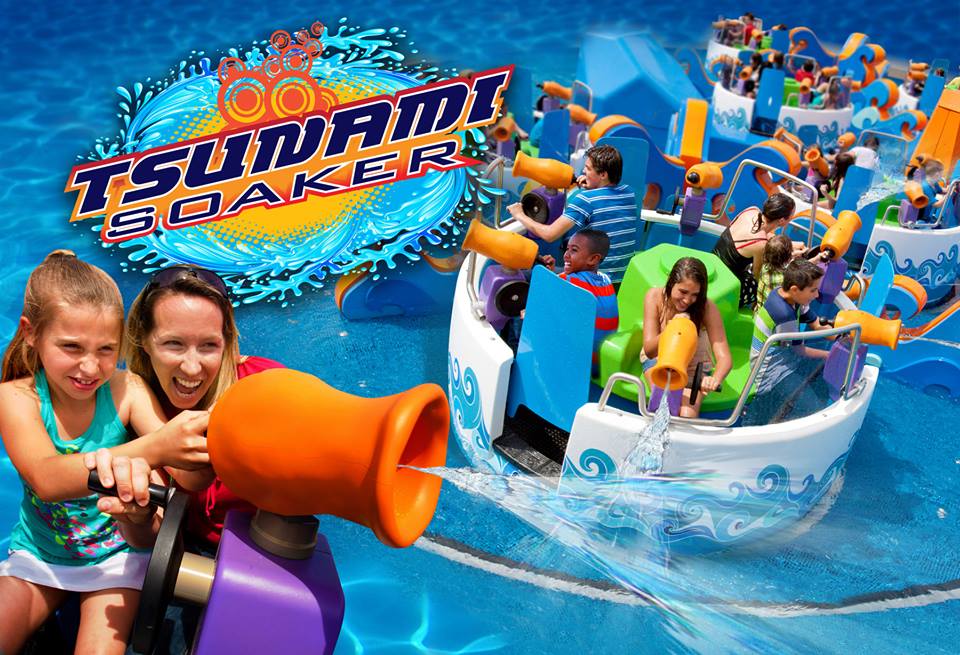
Soaking water + spinning means I’ll sadly have to pass on this one… (Photo credit: Six Flags, Inc.)
Our question – is where exactly will it go? The park isn’t exactly flush with space, so this means either a creative “shoe-in” somewhere in the park, or the removal of an older attraction.
We shall see, because we’re going to leave the speculation to those “other” sites…
In addition, the park has also announced that the popular “Cirque Dreams Splashtastic” WILL RETURN for a limited run again next season. (Which is being overlooked by most other sites) This, combined with the addition of “Tsunami Soaker” gives families a great way to spend their day at Discovery Kingdom.

Cirque Dreams Splashtastic will return for 2014.
And in addition to all of that – a little bit of nostalgia for fans of the park when it was Marine World Africa USA…
The park is going back to being open YEAR ROUND!
Plan your trip to Six Flags Discovery Kingdom for anytime in 2014 – it’s now open year-round!
“With the region’s mild temperatures, being open all year means guests have even more opportunity to enjoy Discovery Kingdom’s wildlife and wilder rides,” said Don McCoy, park president. “In addition to our summer daily operating schedule, we will now be open on weekends year-round ― further cementing Six Flags Discovery Kingdom as the premier destination for affordable, thrilling entertainment.“
Now of course, this means seeing rides go down during that time, just like Disney does at their parks – it will be interesting to see how this new year-round operation affects, well OPERATIONS! Seasonal parks tend to struggle to keep staffing up for some reason in California, so we’ll see how this year-round push goes this time around.
Considering the move to an annual “membership” plans for season pass sales earlier this year, it’s not surprising – but still great to hear officially.
For a complete list of the new for 2014 attractions at Six Flags parks, including some truly insane record-breakers across the country – visit this link HERE.
Lost Parks Episode 3 – Manteca Waterslides Preview
Debuting September, 2013!
If you lived in Northern California odds are you remember this water park not just because they were a technological marvel of their day – but because of their catchy ad jingles. So, “Slip away today and leave your cares behind – they’re the world’s greatest, so come and ride…the Manteca Waterslides!” (1974-2004).
#Hashtag Etiquette – Social Media and Your Amusement Park
#Hashtags – arguably one of the more confusing elements of social media.
For many, they’re seen as useless – for others, they’re invaluable tools for social media. So which one are they for social media and the amusement industry?
They’re actually both.
In laments terms – a hashtag is like a folder on your computer – it’s a depository for anything that uses that phrase of tag. So, if you’ve just opened up a new coaster called, let’s say Iron Rattler for example, the logical hashtag you’d want to promote is: #ironrattler. Got a halloween event coming up? Why not use #HauntCGA (If it’s Great America for instance) or #KnottsHaunt for the Knott’s Berry Farm’s event.
The whole idea behind hashtags is to get people’s attention, quickly – as well as help people discover content they’re interested in. That’s what keeps the user engaged and ultimately through your turnstiles. Because so many social networks are adopting this #hashtag feature, it behooves you to understand what they are and how to use them properly for you amusement park:
1.) Keep it simple!
The longer a hashtag, the more often it will be misspelled. In addition, the harder it will be for people to remember. Say you want to promote a specific ride one day. Your park can post “Have you ridden #theplunge today? One lucky rider will receive a backdoor pass after their ride! #YOURPARKNAMEHERE
Then, you can watch the #theplunge tags, even if you don’t have social media management software (which you SHOULD be using, if you’ve read my previous posts HERE).
2.) Make it unique, but relevant!
Say you’ve just opened up a new coaster called, let’s say Iron Rattler. The logical hashtag you’d want to promote is: #ironrattler. Got a halloween event coming up? Why not use #HauntCGA (If it’s Great America for instance) or #KnottsHaunt for the Knott’s Berry Farm’s event. You wouldn’t want someone else to be getting web traffic because of your event / advertising campaign, would you?
Not to be a shameless plug here, but whenever we shoot our “Lost Parks of Northern California” series – we always send out social media updates using the hashtag: #lostparks. Not only is it easy to remember, but it’s also unique in that it wasn’t being used before – therefore all the content using that hashtag is ours.
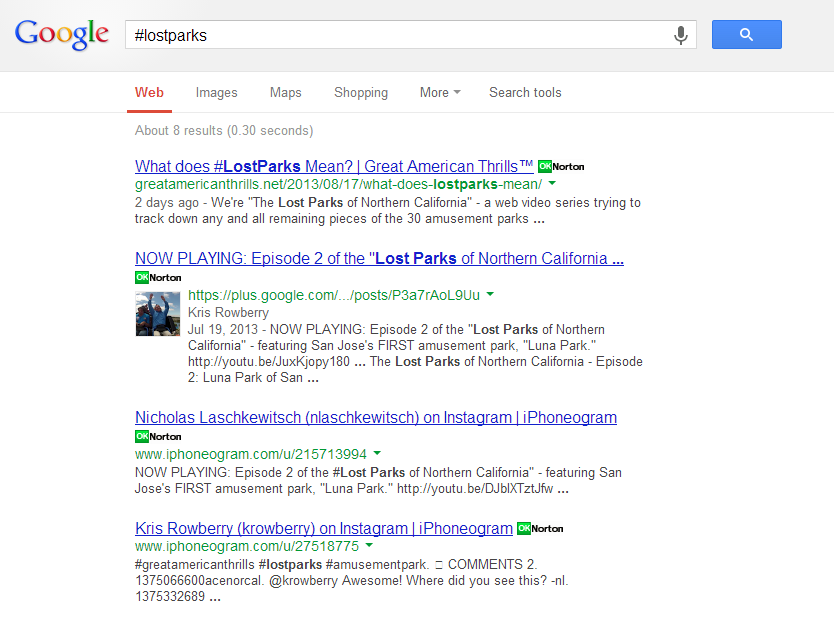
A logical, simple and relevant hashtag makes search engines (and users) easier to capture.
3.) Do NOT make it long!
Remember that some social networks, such as Twitter – give the user only 140 characters to get your message out. A hashtag like #welcomebackspaceexplorers probably isn’t the best bet. But, breaking them up into two smaller hashtags is a better alternative, say #spacemountain #disneyland for instance.
Stick to these guidelines, and you’ll find your SEO increase as well as your interaction via your social media pages. Just be prepared to actually interact with your users – it is SOCIAL media, after all!
In my next post, I’ll discuss the top ten post ideas you SHOULD be doing at your amusement park, regardless of size.
– – –
Kris Rowberry has been following the amusement industry for over 15 years. He has curated social media accounts for several companies, totaling over 450,000 followers across multiple social channels. In addition, he is working on his latest video project: “The Lost Parks of Northern California”
Check out my other postings about Social Media and the Amusement Park HERE.
Happy National Roller Coaster Day!

While it seems everyday is now a holiday – this is one I can get behind!

So after work today, be sure to get out to your local amusement park and celebrate National Roller Coaster Day!
Lost Parks Makes Major Connections!
Look who decided to give us a “like” on one of our behind the scenes shots from this past weekend:

You can imagine my shock when I checked my Instagram feed this afternoon…
We’ll look forward to sharing more with you, Discovery Channel! But, we’d really like for you to come along for the ride with us! : )
Call us anytime – we’re only shouting distance away from M5i and the Mythbusters!
Social Media and the Amusement Park: Don’t Take Yelp Lightly

Despite your personal opinion of the site, Yelp.com has become the de facto review source for many users on the internet. The site says that it’s “Real People, Real Reviews,” and with your amusement park being a major business in the area, chances are someone has already reviewed you and / or created a page for your park. So, how do you monitor and work Yelp to your needs? Read on:
1.) Create an officially moderated Yelp business page, then have it verified:

Multiple pages created by guests only add to confusion in search results and SEO. Plus, misinformation will spread faster.
When searching “Six Flags” in the Bay Area, these are the top four results. Note how there’s seemingly multiple accounts for the park, with reviews about the park in each one. This only makes people confused when they’re trying to find you online. True, the more of you out there, the better for SEO – but not in this case.
By creating an official, park moderated page, Yelp will be more inclined to remove errant listings, making it easier for people to find and review you. Plus, it makes it far easier to respond to guests when there’s only one place to go.
2.) Monitor, monitor, MONITOR!
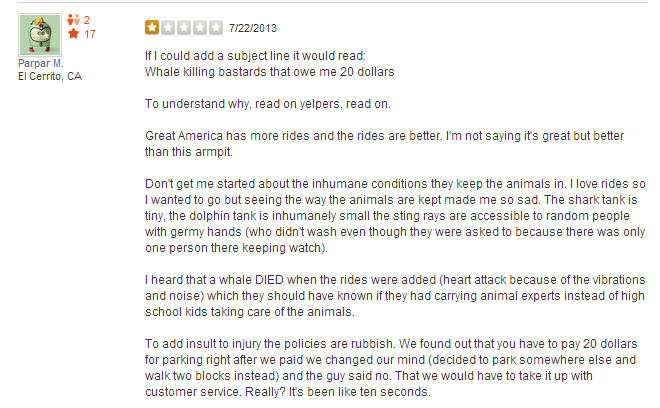
Is this really an accurate review? Hardly – so why allow it to sit for others to view?
It should go without saying, but Yelp is yet another place that you need to be monitoring your image online. Just like your Facebook, Twitter and other social media accounts, Yelp should be monitored closely to make sure that any reviews placed on it are fair, accurate and not derogatory towards your business.
For example, the posting above – is it really an accurate portrayal of the park? Absolutely NOT! So why then would you allow it to stay up, for others to view 24/7? Yelp also gives you the ability to flag reviews for abuse – which is what this one should have done to it.
At the very least – a post like this should be responded to from the park’s official account with accurate information. 95% of angry guests will be quelled once they see the park responding directly to them. Don’t think of it as damage control – think of it more as an opportunity to make a new sale by bringing a guest back. Who knows – they just might upgrade to a season pass…
3.) When you’re wrong – admit it.

Would you eat at a “C” graded restaurant? How people portray you on Yelp has a major impact on decisions to visit.
Look, we’re all human, so we’re not perfect. Mistakes sometimes happen, so it’s up to you to recognize these and make them right wherever possible. But completely ignoring your internet footprint (especially on Yelp) isn’t going to make bad reviews go away.
If a bad review comes in, try to contact the guest first, off of Yelp. Get more information, and then proceed to see what can be done to correct it in the future. Remember that the sooner you contact an angry guest, the better the park looks in their eyes for wanting to assist.
4.) When all else fails, pay Yelp.
Ever wonder why some companies NEVER have a bad review on Yelp? Is it because of the service or business? Maybe. Mot likely, it’s because they pay for those reviews.
You heard right. What most people don’t know, is that companies can actually PAY to look better on Yelp. Yes, call it a shakedown, call it what you will. But the good news – you don’t have to give money to Yelp.
Just by monitoring and responding to reviews through your own company, much as you would with a customer service agent over the phone, or guest service manager would in the park – you’ll see your numbers trend upwards. At the very least, you’ll start getting a better pulse about what your guests are having issues with, and can adapt your business model around it.
Review my prior posts about “Social Media and the Amusement Park” here.
About the Author:
Kris Rowberry has been following the amusement industry for over 15 years. He is the creator and host of both “The Lost Parks of Northern California” and “Great American Thrills®“
The Amazing People Behind the Scenes of “Lost Parks”
The forthcoming episode of the Lost Parks of Northern California was easily our most complicated – and yet it will be our most beautiful, too. But it’s not just me that makes it look good – it’s three talented individuals, Taylor Evans, Robert Ingle and Nicholas Laschkewitsch that make it (and me) look so good.
In addition – what you may not know – is that we’re not making any money on the project. In fact, we lose money on each and every shoot, whether from travel expenses, to material from historical societies – it all costs money. But, we think bringing these parks back to life is more about expanding our skills and more importantly, reclaiming our amusement heritage.
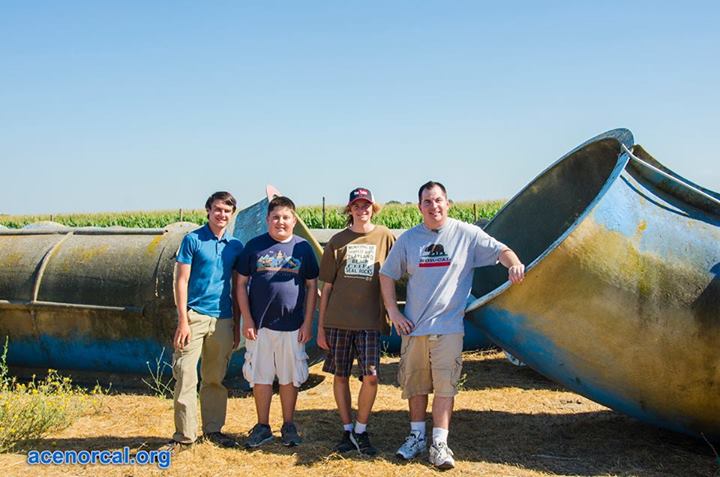
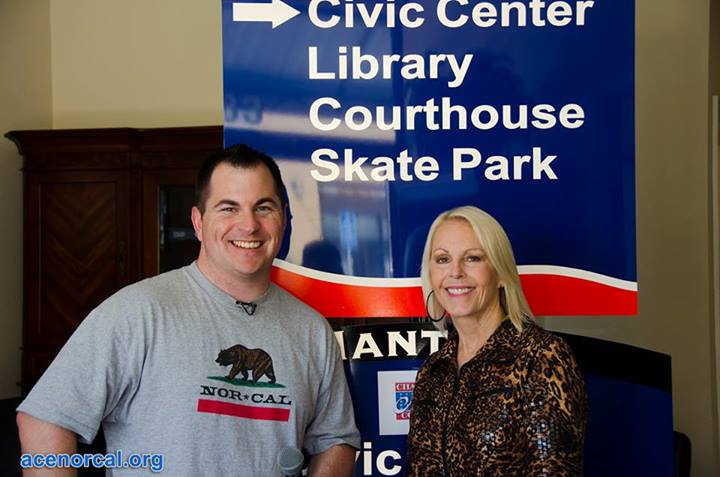
Without these folks behind the scenes, I wouldn’t be able to complete this series! Photo by Ace Northern California, used with permission.
In addition, this upcoming episode would not have been possible without the efforts of the Mayor Pro Tem of the City of Manteca, Debbie Moorhead. Without her connections, we would have never been able to get permission to film at the slides final resting place. In addition, her interview at the Chamber of Commerce was just spectacular and was full of incredible information…
Wrapping up the interview with Mayor Pro Tem, Debbie Moorhead. Photo by ACE Northern California, used with permission.
I knew working on this series would mean making connections to make it all work – I just didn’t think it would be so much fun to do it!

Producer Nicholas and I with our new favorite tool, a ProAm USA DVC 60 camera crane. Thank you Facebook contests! Photo by ACE Northern California, used with permission.
Now, we jest need some production companies to sit up and start taking notice! C’mon guys, let’s hear from you sooner than later!
The Most Bad Ass Amusement Park Ride That Never Was
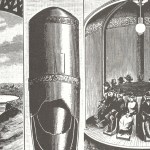

Eat your heart out, Intamin and S&S fans!
Yes, amusement park safety technology was pretty much non-existent back in the last 19th century, but you have to admit that this free-fall ride concept was far beyond the acceptable level of crazy for it’s day.
According to io9.com, this is from, “An 1891 issue of Scientific American. (It) showcased this invention by a one Monsieur Carron of Grenoble, France. In short, Carron had invented an amusement ride that involved 15 patrons falling almost 1,000 feet inside a 30-foot-long bullet, which then would land inside a champagne-flute-shaped, 180-foot-deep well.”
Eat your hearts out, free fall fans. This thing is crazier than the looping waterslide at Action Park in New Jersey. (The only difference – that was ACTUALLY built!)
The article also goes into very specific details on how the “ride” would work:
“Mr. Charles Carron, an engineer at Grenoble, has analytically studied the conditions in which the punctuation of the water by such a shell would be effected, and the reactions that the passengers would have to support. The conclusions of this study show that there is nothing, either theoretically or practically, opposed to its construction and to its operation in falls reaching three hundred meters. The accompanying figures give the general aspect of such a shell capable of accommodating fifteen passengers falling from a height of 300 meters […] The passengers would be securely seated in arm chairs that exactly followed the contours of their body.”
Nevermind the fact that there’s no lap bars to hold you in, or that the wind conditions at 1000 feet are far different than those on the ground. (Trust me, I used to work with an airship company – they’re WILDLY different!) True, in principle it makes sense – but we all know from the Mythbusters that real-world results can always vary!
Here’s my question – who’s ready to queue up for a modern take on this?!?
Luna Park Video Continues to Amaze!

I had the fortune of meeting with Greg Baumann, Editor-in-Chief of the Silicon Valley Business Journal recently – and it turns out he loves learning about Silicon Valley’s history, too!

Let’s hope he enjoys all 23 of the other Northern California lost parks we’re aiming to cover – thanks, Greg!
If you haven’t already checked it out, view our complete “Lost Parks of Northern California” series here: www.greatamericanthrills.net/lostparks
Thank you to the San Jose City Council, District Three!
It’s an honor to be featured in this month’s “Community Spotlight” section of the City of San Jose’s, District 3 Newsletter!
It turns out – quite a few people didn’t know about the origins of Luna Park, including the City Council!
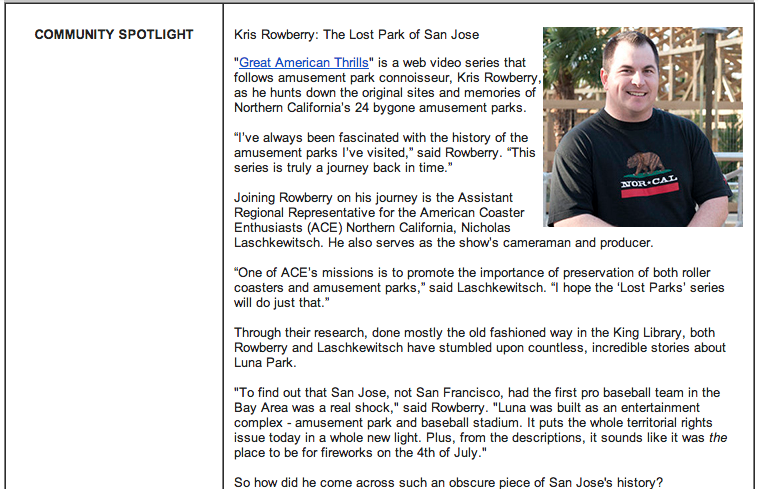
Full text, here:
Kris Rowberry: The Lost Park of San Jose
“Great American Thrills” is a web video series that follows amusement park connoisseur, Kris Rowberry, as he hunts down the original sites and memories of Northern California’s 24 bygone amusement parks.
“I’ve always been fascinated with the history of the amusement parks I’ve visited,” said Rowberry. “This series is truly a journey back in time.”
Joining Rowberry on his journey is the Assistant Regional Representative for the American Coaster Enthusiasts (ACE) Northern California, Nicholas Laschkewitsch. He also serves as the show’s cameraman and producer.
“One of ACE’s missions is to promote the importance of preservation of both roller coasters and amusement parks,” said Laschkewitsch. “I hope the ‘Lost Parks’ series will do just that.”
Through their research, done mostly the old fashioned way in the King Library, both Rowberry and Laschkewitsch have stumbled upon countless, incredible stories about Luna Park.
“To find out that San Jose, not San Francisco, had the first pro baseball team in the Bay Area was a real shock,” said Rowberry. “Luna was built as an entertainment complex – amusement park and baseball stadium. It puts the whole territorial rights issue today in a whole new light. Plus, from the descriptions, it sounds like it was theplace to be for fireworks on the 4th of July.”
So how did he come across such an obscure piece of San Jose’s history?
“It honestly just came as inspiration driving through the Luna Park Business District and seeing all the banners,” said Rowberry. When I saw the carousel horse on one of them, I knew there had to be an amusement park here at some point. That’s the real impetus for wanting to highlight this park – well that and I lived in San Jose for nearly 26 years and never knew about it.”
Thank you Kris for bringing back the memory of Luna Park and a piece San Jose history!
Learn about Luna Park for yourself, here:
Lost Parks Episode 2 Debuts This Friday!
If you haven’t already, check out our preview for the second installment of the “Lost Parks of Northern California.”
Do you know the way to San Jose – and it’s first amusement park?
Ride Review: California’s Great America – The Grizzly

When I attended a construction tour and park preview at California’s Great America this past winter, it was announced that the Grizzly (the park’s perennially basement dwelling wooden coaster) was completely overhauled and had, in fact, been sped up by nearly 12 seconds.
Understandably, there were grumbles and guffaws from the audience. After all, this was a coaster that had finished DEAD LAST in many coaster polls for DECADES. At one point, you have to think the park should have thrown a faux celebration at that dubious honor, right?

Really?!? Grizzly is so boring you can text while on it? I disagree.
However, I am happy to report that the Grizzly, at the mid point to it’s operating season – is running smoother, faster and better than I can ever remember. (And I remember RIDING it in the 1980’s!)
But wait – there’s more!
It’s also moving so fast (from what it was before) that it’s actually placing some nice g-forces on riders in the lower turnarounds.
You read right – Grizzly, a coaster that was smoothed out from it’s original design to be more “family friendly” in the 1980’s – is becoming more and more forceful with every day she’s running. (And that’s a GOOD thing!)

Smiles, not grimaces now adorn riders of the Grizzly.
Will it ever compete with Gold Striker on thrills? Absolutely not – even with extensive re-profiling to match more closely to the ORIGINAL Grizzly design at Kings Dominion in Virginia – to compare Gold Striker and the Grizzly is unfair.
However, with two very re-rideable wooden coasters now in the park, the Grizzly makes for a perfect “starter” coaster for the enthusiast in training, who’s not quite ready yet to “strike gold.”
Now, if only the park could speed up dispatches by doing away with those unnecessary second and THIRD seat belts…
Lost Parks of Northern California – Episode 2 Preview
It’s finally here!
Episode 2 of the “Lost Parks” series is in the bucket and ready for release. So until the actual episode debuts, check out this quick preview of San Jose’s OTHER long lost amusement park – LUNA PARK!
Look for the actual episode to debut later this month!
 Great American Thrills®