
Our Next Lost Park…

We’re hoping that by choosing this park, we just might bring summer back this year…it’s freezing in the Bay Area right now!
Well, you know it from it’s catchy jingle or if you ever drove through the Central Valley on the way to Yosemite or Sonora…
That’s right! We’re going back to the “famous” MANTECA WATERSLIDES!
(SKIP to 2:40 for the good stuff…)
Reaching for the Brass Ring

Odds are, you’ve heard the phrase, “reach for the brass ring” at least a few times in your life. Heck, there’s even a website with the same theme.
But, I’m willing to bet a Fast Pass that you probably don’t know where the phrase originated – turns out, it’s amusement park related and it’s also one of the greatest pieces of nearly lost Americana.
In fact, according to the National Carousel Museum, there are only 12 places left in the United States where you can still, “reach for the brass ring.”
A carousel brass ring machine is similar to a lottery – catch the lucky ring on your ride, and you usually got a free re-ride. Only come up with a steel or iron ring? Just toss it into the (insert open mouth item here).

Reaching for the brass ring at the Santa Cruz Beach Boardwalk.
Once a staple of every carousel (just like a live band organ), the ring machine slowly feel out of favor with most parks.
Ring machines are generally a pain – literally. Anyone caught not paying attention could be in for a nasty surprise if they leaned outward at the wrong time. Plus, there’s the toll the rings take on the horses, themselves. Ring throwers aren’t always the most accurate – and ricochets also take their toll on the wooden carvings.
In addition, while brass is certainly beautiful, it has one minor flaw – it’s incredibly malleable. (Easy to bend and shape). So, while it’s great for making rings, it’s even better at jamming ring machines when they eventually deform from wear and tear.
With higher insurance premiums, threats of litigation and soaring maintenance costs – most parks opted to remove the finicky machines in order to cut costs.
Even the Santa Cruz Boardwalk , seen today as a champion for amusement history and preservation, removed its ring machine back in the 1970’s. As a result, ridership plummeted 50%. Needless to say, the ring machine was back up faster than you could say, “Welcome back, riders.”
But, for the parks that have kept this great tradition alive – it’s worth the sacrifice. For the riders, it’s just another reason to visit these traditional parks.
Lost Parks of Northern California – Episode 2 Preview
It’s finally here!
Episode 2 of the “Lost Parks” series is in the bucket and ready for release. So until the actual episode debuts, check out this quick preview of San Jose’s OTHER long lost amusement park – LUNA PARK!
Look for the actual episode to debut later this month!
Connecting with our Past

I’m always fascinated and shocked when we go out into the field how many people have such fond amusement park memories.
I shouldn’t be so surprised – yet are built for fun after all – but I think we all sometimes forget that we need a little fun in our lives.
Sometimes, it just takes a guy with a camera, microphone and bright light to remind us of all the good times.
Social Media and Your Amusement Park

Arguably, the biggest change in terms of marketing in the past decade has to be the meteoric rise of social media.
In the past (referred to as web 1.0), parks and attractions had fan pages or message boards that covered daily events or changes. In some cases, these outlets also promoted the park in a positive light, but that wasn’t always guaranteed.
Today (in web 2.0), parks now have the ability to schedule and control messages to potential and repeat customers on an ongoing, daily basis. Even the best television campaign could not reach such a targeted audience.
But, being relatively new to the game, many parks don’t quite understand how to use social media properly to benefit them. Sadly, in many cases, parks are shooting themselves in the digital foot.
So how then can your park or attraction avoid the most common pitfalls of social media?
1.) Social media means just that – BE SOCIAL!
The point of social media is to start (or maintain) a conversation. Whether it’s between you and your customers, or your customers and potential customers – once a story or idea starts online it can quickly lead to revenue, if it gains enough traction and virality.
However, simply throwing up a daily update on something cool about the park is not going to reach most of your audience. Just because you have 50,000 likes on Facebook, does not mean all 50,000 are seeing your post.
Not everyone enjoys pretty pictures – some are more engaged with a “What’s this Part” or “Flashback Friday” post. Create a weekly checklist of specific post types so that you can reach a greater majority of your online audience.
2.) Always promoting an item or product is social media poison.
Yes, we’re all looking for a quick return on investment, but consider this: If you throw away junk mail whenever it comes in your mailbox at home, why wouldn’t you do the same if presented with the same situation on your social media channels?
While a thinly veiled call to action is okay every now and then, it’s not good to fill your feed up with “BUY THIS!” in each and every post you put out. Simply put, lose the 1960’s “Mad Men” advertising jargon that we all have had been beaten into our heads over our lives, and be more, “real.”
That being said, don’t forget that your social media posts are a major (and instant) public-facing outlet that has the potential to reach millions if something goes awry.
Simply put, social media is not something you assign your seasonal marketing intern as a fun project. It should be a full-time position, as it can actually keep your audience engaged (and spending money) even in the off-seasons.
3.) While your park or attraction may close for the night, your social media feeds don’t.
Remember that the internet is on 24/7/365. While a majority of posts are made between 8:00am and 8:00pm, that can change depending on your audience and operating hours. Responding to posts, both good and bad, in a timely manner can mean the difference between closing a sale and losing a customer for life.
In addition, the larger your social media audience becomes, the more susceptible you become to nefarious postings, such as links to pornography on your public facing wall or feed. The faster you can pull them down, the less people will have seen it.
4.) Negative feedback on your social media feed is an opportunity, not blight.
The absolute, worst behavior a park could do when managing negative feedback on social media is to simply ignore it. There are very limited circumstances where a deleted comment or all-out ban from the page could be necessary, but if managed properly, these situations are rare.
Nothing will make an angry guest feel better than to know that someone is listening or trying to rectify the situation. Even if it’s simply re-iterating a policy that the guest does not agree with, it’s still better to show the effort to others on the feed than to delete it or worse, ignore it altogether.
5.) Stir (and track) conversation with park centric hash tags, but don’t make it too complicated
Remember the old “Kodak Photo Spot” in your park? Hash tags are the new photo spot. Create a simple one to see what people are doing and saying in your park, along with mentions of things that people may talk about, such as new attractions.
Because you’ll be tracking mentions and hash tags, you’ll quickly discover that a good majority of your social media content literally writes or creates itself. You can share guest photos, positive experiences and interact directly with them. I guarantee they’ll want to share with all their friends and family that, “…’So and So Park’ re-tweeted my pic!” That’s social media at work.
6.) Use cell phone photos only when absolutely necessary – have a DSLR with you.
Cell phone cameras are convenient, yes – but they have limitations in terms of quality. While it’s easy to post an update from inside your park via phone, try to resist. A higher quality photo – from a SLR style camera – will allow you to add logo watermarks back in the office. A higher quality photo will also encourage people to save it on their desktop or share it with others – where it will always be in front of them at work, home or their mobile device. And your logo is right there next to it.
Shares and re-tweets, however can be cell phone shots – as these are directly from guests. A higher quality photo automatically sets the parks’ content above the guests, so it becomes more recognizable.
7.) Use the outlets that work the best for your skill and for your park.
While it’s not a bad idea to get your feet in the water on as many of the popular social networks as possible – beware that they all have different audiences and content requirements. Google+ tends to be a more educated, affluent crowd. Instagram requires only photos, while Pinterest is weighted heavily towards women.
Don’t try to overreach when you first start off – go with the outlets that make most sense to you and your audience. Once you’re comfortable, slowly begin to expand. Sometimes too much of a good thing is well, too much!
Review my prior posts about “Social Media and the Amusement Park” here.
About the Author:
Kris Rowberry has been following the amusement industry for over 15 years. He is the creator and host of both “The Lost Parks of Northern California” and “Great American Thrills®“
Photo of the Day: Honolulu Halfpipe at Waterworld Concord
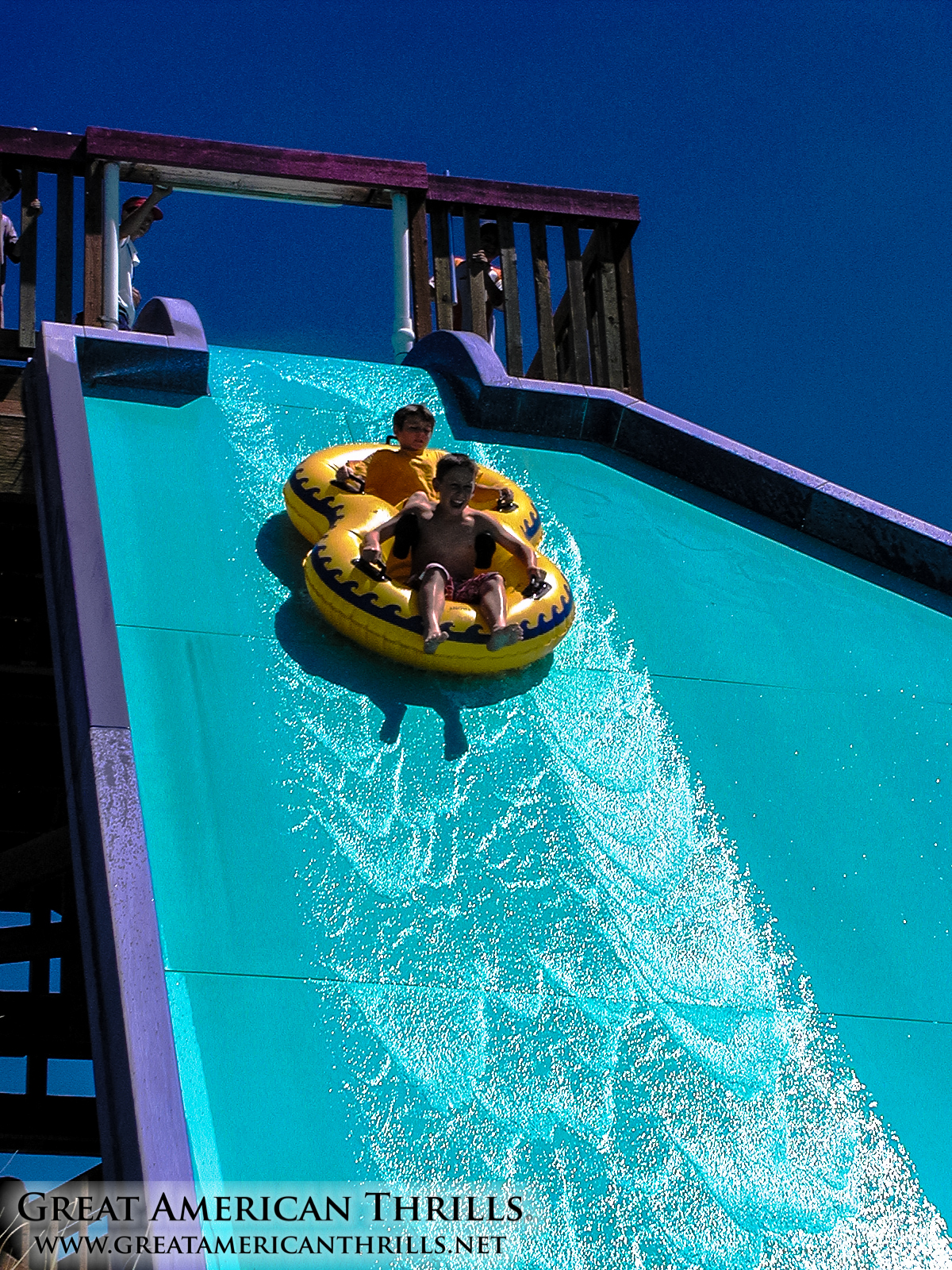
Whenever I’m walking around a park, I’ve always got my camera ready – just in case an opportunity presents itself. Of course, at a waterpark it tends to be a bit more difficult. Not only do you have to worry about the water hitting your camera, but you’ve also got to be careful not to look like a total creep taking photos of half naked people. (Unless that’s what you’re doing, in which case please stand out so security can escort you out).
Thankfully, I didn’t have to worry about that second part when I took this shot – I was working for the park at the time and in full uniform, too. “Honolulu Halfpipe” sends riders sloshing back and forth until they stop at the bottom – and simply step out to the side of the half-pipe. Great for the quick shot of “airtime,” too!
Thanks to my friends at BorrowLenses for allowing me to capture such beautiful photos with their gear.
Interested in purchasing / using some of my photos? Check out my 500px: http://500px.com/GreatAmericanThrills
View my videos on YouTube: http://www.youtube.com/user/GreatAmericanThrills
Follow me on Facebook: http://www.facebook.com/GreatAmericanThrills
Tweet me on Twitter: http://www.twitter.com/krowberry
+1 me on Google+: https://plus.google.com/u/1/115502587437263155125/posts
Follow me on Instagram: http://instagram.com/krowberry
Photo of the Day: Thunder Run at Six Flags Kentucky Kingdom
Just shouting distance from both Churchill Downs and sitting between the flight path to Louisville Int’l Airport, (Then) Six Flags Kentucky Kingdom had a tough life. The park was poorly designed, owing to it’s confusing layout and bisected sections. While it WAS part of the Six Flags chain, it stood on state fair land – and had to relinquish control (and profits) of all it’s rides and attractions for two weeks, while the state fair was occurring.
When I visited in 2008, the back half the park was closed due to financial reasons. The park closed that next year.
Closed for several years now, Kentucky Kingdom park is looking to make a comeback in the next few months by re-launching without a major brand behind it. (I.E. it is no longer part of the Six Flags brand).
Ed Hart, the former park president who famously posed for this photo,will once again head operations.

Thunder Run was a highlight of the park, even in the “lean” years before it closed.
As always, a big thanks to my friends at BorrowLenses for allowing me to capture such beautiful photos with their gear.
Interested in purchasing / using some of my photos? Check out my 500px: http://500px.com/GreatAmericanThrills
View my videos on YouTube: http://www.youtube.com/user/GreatAmericanThrills
Follow me on Facebook: http://www.facebook.com/GreatAmericanThrills
Tweet me on Twitter: http://www.twitter.com/krowberry
+1 me on Google+: https://plus.google.com/u/1/115502587437263155125/posts
Follow me on Instagram: http://instagram.com/krowberry
Photo of the Day: Tatsu at Six Flags Magic Mountain
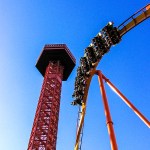
When you build a ride at Six Flags Magic Mountain, there’s an expectation that it has to be bigger and badder than the rest. Tatsu is definitely one of those coasters.
Built on the top of the large hill that defines the park, Tatsu is easily the most intense flying coaster built by Bolliger and Mabillard. I dare you to find a better lift on a ride – as you climb, the terrain falls below you, giving the illusion of rising much faster than you actually are!

When it opened, Tatsu featured the largest inversion on a flying coaster – the VERY intense “pretzel loop” element.
As always, a big thanks to my friends at BorrowLenses for allowing me to capture such beautiful photos with their gear.
Interested in purchasing / using some of my photos? Check out my 500px: http://500px.com/GreatAmericanThrills
View my videos on YouTube: http://www.youtube.com/user/GreatAmericanThrills
Follow me on Facebook: http://www.facebook.com/GreatAmericanThrills
Tweet me on Twitter: http://www.twitter.com/krowberry
+1 me on Google+: https://plus.google.com/u/1/115502587437263155125/posts
Follow me on Instagram: http://instagram.com/krowberry
Top Five Most Terrifying Amusement Park Mishaps of All Time
You see it all the time come the summer months, “Killer ride injures passengers,” “Man dies after roller coaster ride.” Heck, search, “roller coaster accident” on YouTube, and you’ll find no shortage of videos – mostly of rides undergoing a “safety cut out” where all trains simply stop where ever they are in the circuit.
While these “stories” are mostly media spin, incidents have and still do occur – however many are a direct result of disobeying park rules and regulations. With that being said, here now are the five most terrifying (actual) amusement park mishaps:
5. Happiest Place on Earth?

Monorail track is not an alternative to the front gate.
Disneyland has certainly seen it’s fair share of problems over the years. Nine people have been killed in the park (although officially they all died ‘on the way to the hospital,‘ as no one ever dies in Disneyland‘).
Seven of the nine deaths can be directly attributed to disobeying park rules or trespassing. Two have drowned in the Rivers of America. An employee who wasn’t aware of her surroundings was crushed in the “America Sings” Theater.
But the one we’ll focus on is the story of Thomas Guy Cleveland, who at 19 years old, had the brilliant idea of getting into the park via the monorail track.
Amazingly, he scaled the 15 foot track, avoided the 240V power line and began his trek to get into Disneyland immortality.
When security spotted him – naturally he began to run down the beam to avoid them. What he didn’t realize, was that they were trying to warn him that a monorail was approaching and that he should jump off the beam.
He didn’t jump off – and he didn’t get into the park for free, either.
This is certainly not the first time that someone has been killed jumping fences or at least trying to at an amusement park. This kid is lucky he still has life after diving into Jurassic Park: The Ride to retrieve his lost hat – while the ride was running. Not the brightest bulb in the set. Even if you’re not a fan of amusement parks – this video will make you cringe.
It just proves – you can’t stop stupid – no matter how many fences, gates and signs you put up.
4. Perilous Plunge – Knott’s Berry Farm, CA (2000-2012)

Perilous Plunge was plagued with delays, malfunctions and modifications in its’ 12 year run. (Photo by Knott’s Berry Farm.)
When it opened in 2000, Perilous Plunge was the tallest, fastest, steepest (and wettest) flume ride in the world.
It was also the most temperamental advanced water ride of its’ time, requiring complete computer control and even a magnetic braking system built into the base of the ride to stop it in the limited space available for a splashdown pool.
During a special event at the park, a woman somehow slipped out of the ride’s lap bar restraint system on the drop, killing her instantly. Investigators believed that because she was so overweight, her mass shifted violently in the steep drop, causing her to fall out.
The boats on the ride were later modified with 5-point racing harnesses as additional restraints – then converted to standard, over the shoulder “horse collar” restraints. The entire attraction was scrapped in late 2012 for future expansion.
3. Crystal Beach Cyclone – Ontario, CN (1927-1946)

Traver’s most successful of his “terrifying triplets.”
The most famous of Harry Traver’s designs, the Cyclone was and still is considered to be the most intense roller coaster ever built. With speeds approaching 55 mph and g forces in excess of +5, there aren’t many steel coasters today that can pull that off. (And the Cyclone was wood, with a steel lattice structure.)
Considering the ride ran for nearly 20 years with only a single fatality was mind boggling – how it happened is even more head turning (Literally).
Turns out in 1938 – on opening day of the season, no less – Amos Wiedrich allegedly stood up to take his coat off, after the ride had begun. Because he was out of his seat on the first drop, he simply fell out from the forces. To ad insult to injury, he was hit seconds later by the train he had been riding in when it came back around through the circuit.
Oh, did we mention this was the only roller coaster in history to have a Nurse’s Station at the exit? (Apparently it was all for show, but considering the damage this ride could have done, it may have been a worthy investment to keep the insurance down!)
2. Action Park “Cannonball Run” – Vernon, NJ (1985-sporadically into 1996)
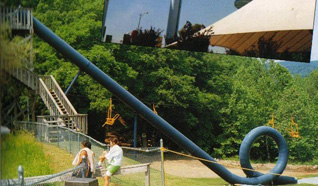
Someone apparently thought this was a good idea.
Yes, you heard me right, looping water slide. Long before parks were marketing 45 degree pitched slides as “looping” Action Park in New Jersey had them beat with a bona fide vertical looping water slide.
According to most reports, the ride was open for one month in the summer of 1985, then was opened sporadically through 1996, when it was eventually torn down.
By principle, it *should* have worked – but that wasn’t the case…ever.
Concussions, abrasions and the possibility of being stuck in the slide were all risks people were willing to take to get on this ride – well, that and allegedly $100 bills that park management bribed them with to try it.
You can read a first hand account of the ride from someone who actually experienced it here.
On a related side note – Action Park (and many of it’s “groundbreaking, people breaking” attractions) was closed in 1996, and re-opened as Mountain Creek Resort in 1997. All of the non-conforming (i.e. unsafe) rides, including the looping waterslide were destroyed – with newer, safer ones replacing them (Though, that’s up for debate).
1. Lightning – Revere Beach, MA (1927-1933)
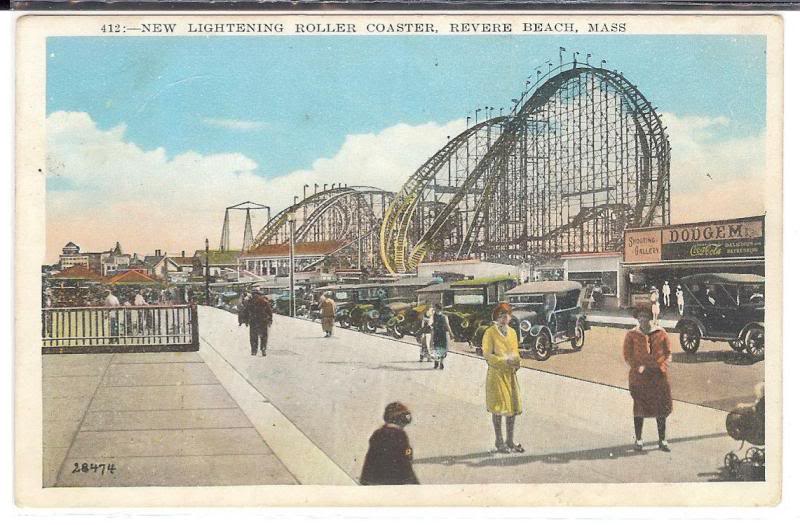
Revere Beach’s “Lightning”
The last of Harry Traver’s infamous “Terrifying Triplets” – Lightning was so twisted, most riders could not handle the brutal forces exerted on them.
On the second day of operation, a young girl was somehow ejected from the ride and died after hitting the track below. According to lore, the ride was shut down for 20 minutes, “…so they could remove the body.”
That’s right – the ride was back up and running after only 20 minutes. Odds are, the line increased quite a bit, too.
Back in the 1920’s it wasn’t unheard of for a ride to become more popular after it killed someone. Today, we have a bit higher standards and regards for our personal safety, thankfully.

Roar! at Six Flags Discovery Kingdom in Vallejo, CA
Sharp eyed coaster fans will notice that both the Lighting and Cyclone first drops have a modern counterpart. Both the “Roar” wooden coasters at Six Flags Discovery Kingdom and Six Flags America share the similar first drop with Traver’s triplets.
So, will we ever see another Crystal Beach Cyclone, or looping water slide? At the rate safety technology is going – I certainly wouldn’t put it out of the realm of possibility. Just look at how far we’ve come in just the past 90 years!
—
And there you have it – ten of the most terrifying amusement park mishaps of all time.
It should be noted, that while awful and scary as some of these incidents are, they are also an infinitely tiny minority of the total rides taken over the course of history.
Many of these instances occurred before the advent of safety regulations, government oversight, understanding of g-forces or restraint technology.
The odds of you being injured at a modern amusement park are actually lower than when you are driving to the park itself. So be smart – obey the park rules and you’ll have a fun and safe time!
 Great American Thrills®
